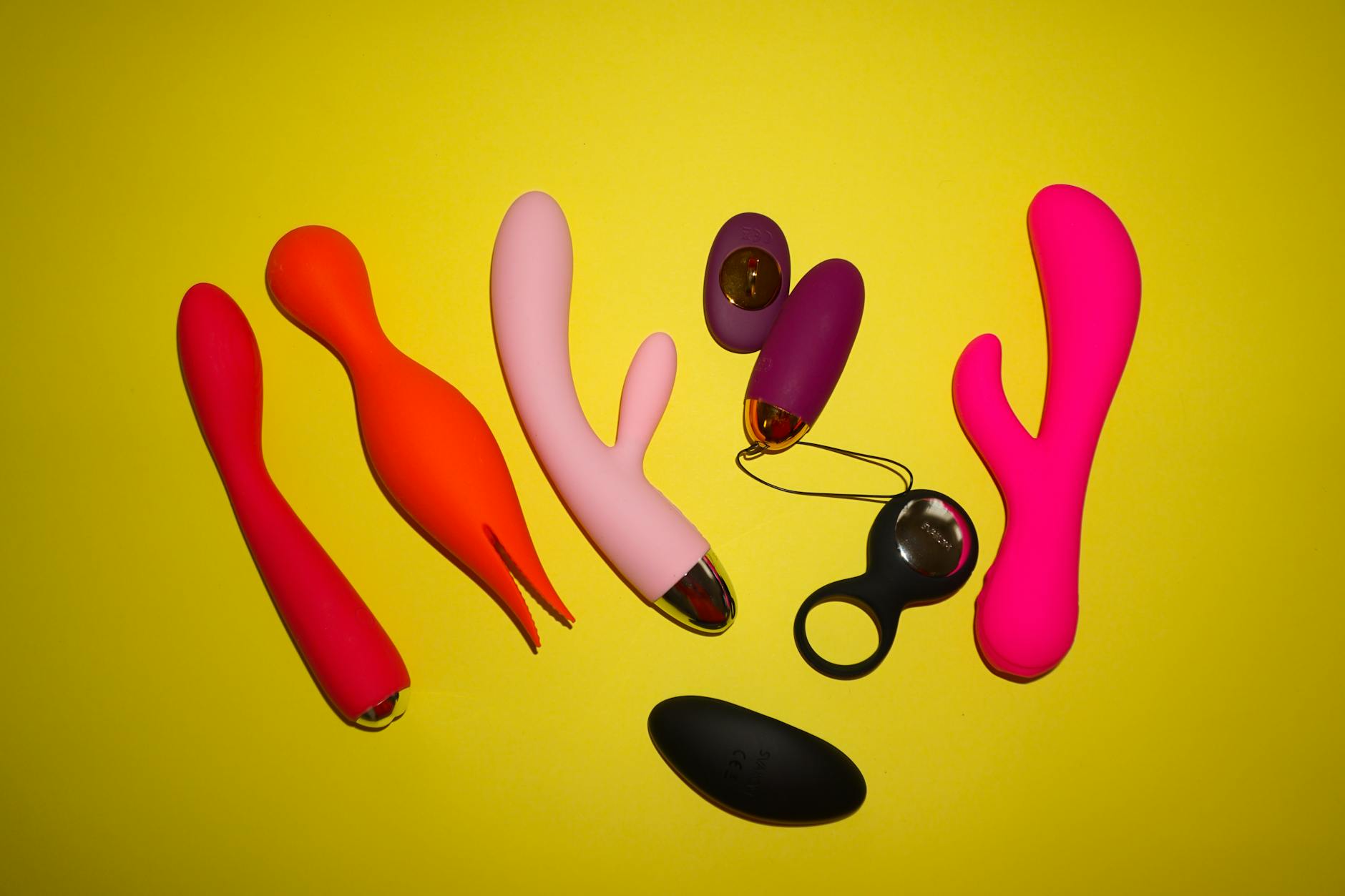
Here's the thing about hormonal shifts and pleasure
When your body's hormone levels change, your vulva gets the memo first. The tissue thins slightly, lubrication patterns shift, and that responsive buzz that used to light you up might feel flat or even uncomfortable. You haven't lost your capacity for pleasure. Your body's chemistry has just changed the rules.
This happens when you stop hormonal birth control, enter perimenopause or menopause, start or adjust hormone replacement therapy, or experience shifts related to thyroid function, cortisol, or other metabolic changes. It's not a malfunction. It's a recalibration.
The problem is that most vibrators are designed for one nervous system state. When your hormone profile shifts, you need a different tool.
Why traditional vibrators feel different (or disappointing) after hormonal changes
Standard vibrators rely on oscillation. The motor shakes at a consistent frequency, usually between 50 and 200 Hz. This works beautifully when your tissues are fully engorged, your lubrication is abundant, and your nerve endings are primed for the signal.
But here's what hormonal changes do to that equation.
When estrogen drops (whether from stopping birth control or entering perimenopause), the tissue of your vulva becomes thinner and less vascularized. That means less blood flow to the area, less natural lubrication production, and slower arousal response. The traditional vibrator is still throwing the same frequency at tissues that are now less responsive to it.
You end up needing more intensity, more time, or more stimulation to reach the same sensation you used to feel. Some people report that higher intensities now feel irritating instead of pleasurable. Others say the old vibrator worked great, but something feels off. That something is biology.
Lemon suction toys work differently. Instead of shaking, they create rhythmic suction pulses that draw tissue upward and stimulate in a way that doesn't depend on rapid oscillation. For post-hormonal-shift bodies, that matters.
How suction stimulation works better when your sensitivity changes
Suction operates on a different neurological pathway than vibration. Instead of triggering fast-twitch sensory receptors, suction engages deeper tissue stimulation and can create more localized, intense sensation without requiring the same level of baseline arousal or tissue engorgement.
Here's what I see clinically. People who've experienced hormonal changes report that suction-based lemon clitoral vibrators feel more satisfying because the stimulation works with the tissue's current state, not against it. The pulse patterns that lemon vibrators offer (usually 7 to 14 different rhythms) allow you to find a cadence that matches your body's responsiveness now, not five years ago.
One client described it this way: "My old vibrator felt like it was demanding something from me. The lemon felt like it was listening to what I could give."
That shift matters psychologically too. When pleasure requires constant adjustment or feels like work, desire itself can drop. But when the tool fits your body's actual state right now, arousal often returns naturally.
The hormonal scenarios where lemon sexual toys shine
Coming off hormonal birth control
The first 3 to 6 months after stopping the pill, patch, or ring, your body recalibrates testosterone and estrogen levels. You're not back to "baseline" yet, but you're not on exogenous hormones either. You're in transition. Many people report that sensitivity feels unpredictable during this window. Some days are fine. Some days nothing feels quite right.
Lemon vibrators' variable intensity and suction patterns let you adjust on the fly. You're not locked into one frequency that may or may not work today.
Perimenopause and menopause
This is where the research is clearest. Declining estrogen narrows the vaginal tissue, reduces natural lubrication, and can make even light friction uncomfortable. But sensation capacity doesn't disappear. It changes.
Studies on post-menopausal sexual response show that suction-based stimulation produces more consistent arousal and orgasm than traditional vibration in this population. A 2022 study in the Journal of Sexual Medicine found that people post-menopause reported higher satisfaction with air-pulse technology than with standard vibrators, specifically because it didn't require the same level of engorgement or lubrication to feel effective.
The Lem vibrator and similar lemon suction toys were designed with this in mind. They work well before menopause and after, but they excel when your tissue state has changed.
Adjusting hormone replacement therapy
If you're on HRT (whether for menopause, thyroid, or other reasons), dosage changes can create temporary shifts in sensitivity. During adjustment periods, your body might feel either hypersensitive or blunted. Lemon adult toys' customizable patterns help you navigate that instability.
Hormonal contraceptive adjustments
Changing the type of contraceptive, switching from hormonal to non-hormonal methods, or taking a break can all shift your baseline arousal and sensitivity. Some people report that their pleasure response changes within weeks of a new birth control method. Lemon clitoral vibrators give you options to match what's actually happening in your body.
The practical adjustments that make lemon vibrators work even better
Having the right tool is step one. Using it right is step two.
Start with the lowest intensity. If you've recently experienced hormonal change, begin at setting 1 or 2. You can always go higher. You can't undo overstimulation.
Use more lubrication than you think you need. Water-based lube isn't a sign of dysfunction when your hormone profile has shifted. It's a functional aid. Apply it generously, and reapply mid-session.
Warm up longer. Arousal takes time when your hormones are recalibrating. Budget 15 to 25 minutes instead of rushing. Many people find that patient warm-up time with a lower-intensity setting creates better sensation than high intensity rushed.
Experiment with patterns. Unlike a single-speed vibrator, lemon sexual toys offer 7 to 14 different pulse rhythms. Spend time finding which patterns feel best in your body's current state. What worked three months ago might not be your favorite now.
Pay attention to your cycle, if you have one. Even if you're perimenopausal or on HRT, residual hormonal fluctuation can change sensitivity week to week. You might notice that the same vibrator feels different depending on where you are in your cycle.
How this fits into your intimate life with a partner
If you're navigating hormonal changes alongside a relationship, communication becomes the real tool here.
Many couples interpret a change in sexual response as a relationship problem when it's actually a body problem. Your partner isn't less attractive. Your body isn't broken. Your hormones changed, and you need a different approach.
Using a lemon clitoral vibrator in partnered sex can actually ease this transition because it removes the pressure from penetration or manual stimulation alone. Suction-based stimulation works well alongside penetration or foreplay without requiring your partner to maintain intensity indefinitely.
That said, the best thing you can do is name what's happening. "My body is responding differently, and I want to explore what feels good now" is a completely different conversation than "something's wrong with us" or "I'm not attracted to you anymore."
When sensitivity changes warrant a conversation with a doctor
If suction-based lemon vibrators still aren't working, or if you're experiencing pain alongside the sensitivity changes, talk to a healthcare provider who specializes in menopause, endocrinology, or sexual health.
Genitourinary syndrome of menopause is real, treatable, and worth addressing. Low testosterone or thyroid dysfunction can flatten arousal even with the right tool. A good doctor can rule out medical factors and help you find solutions.
But if sensitivity has just shifted and a different type of stimulation (like suction) feels better, that's not a medical problem. That's adaptation.
The bottom line
Your hormones changed. Your pleasure didn't disappear. It evolved. A lemon vibrator is designed for bodies in transition because suction stimulation works with your tissue state right now instead of demanding it to perform like it did before. That difference is the whole point.
People also ask
Why do lemon suction toys feel more intense than regular vibrators if they're not vibrating as fast?
Intensity isn't just about frequency. Suction creates localized pressure and draws tissue upward, which engages different nerve pathways than oscillation. Many people experience suction as more focused and satisfying even at lower motor speeds. It's a different type of sensation, not a weaker one.
Can hormonal changes make it impossible to orgasm with any vibrator?
No. Hormonal changes can make orgasm harder to reach or feel different, but the nerve pathways don't disappear. What often helps is a combination of the right tool (like a lemon clitoral vibrator), patience with arousal time, adequate lubrication, and sometimes a conversation with a healthcare provider if other factors like stress or medication are at play.
How long does it take to adjust to a new vibrator after hormonal changes?
Most people need 3 to 5 sessions to find their rhythm with a new type of stimulation. Your body learns quickly, but those first few times might feel exploratory rather than immediately satisfying. That's normal. Give yourself permission to experiment without expecting an orgasm every time.
Is using lube with a lemon vibrator different than with regular vibrators?
Lemon suction toys work better with lube, and you'll typically use more of it. The suction works most effectively when there's a slight moisture barrier. Water-based lube is essential because silicone-based lubes can damage silicone toys. Reapply as needed during longer sessions.
Can hormonal birth control changes affect pleasure permanently?
No. Your body recalibrates within 3 to 6 months of stopping hormonal contraception. Your baseline arousal and sensation will eventually stabilize. During the transition, a flexible tool like a lemon vibrator helps you find pleasure while your hormones sort themselves out. This is why exploring different lemon sexual toys during hormonal shifts can be genuinely helpful.
If my partner uses a lemon vibrator during perimenopause, is that a sign of a problem in our relationship?
Absolutely not. It's a sign of adaptation and self-care. Many couples incorporate lemon clitoral vibrators into partnered intimacy specifically to ease the transition through hormonal changes. Using a vibrator doesn't mean your partner isn't attracted to you or that the relationship is failing. It means you're both prioritizing pleasure and connection even as bodies change.
What happens next
If you're navigating hormonal changes and your usual tools aren't working, that's your body telling you something important: it's time to listen to what it needs now.
Exploring lemon vibrators or other suction-based lemon adult toys is one way to do that. But so is giving yourself permission to experiment without pressure, opening conversations with your partner about what's shifting, and checking in with a healthcare provider if something feels off beyond just sensitivity changes.
Your pleasure matters. So does your body's evolution. They're not in conflict.
If you're unsure where to start or have questions about what might work for your specific situation, reach out to us. We're here to help.