Let's start with what your doctor probably didn't mention
Antidepressants work. They've pulled millions of people out of depression and anxiety that made life unbearable. But here's what gets buried in the side effects section: SSRIs, SNRIs, and some other psych meds flatten sexual sensation and make orgasm harder to reach. Not impossible. Harder. And for a lot of people, that trade-off feels like losing a crucial part of themselves.
The good news is that this isn't permanent damage. It's a neurochemical shift that responds to different kinds of stimulation. A lemon clitoral vibrator works differently than a traditional vibrator, and for people on antidepressants, that difference can be the thing that brings sensation back.
How SSRIs actually affect your clitoris
Your brain uses serotonin to regulate pleasure, arousal, and the ability to reach orgasm. SSRIs (selective serotonin reuptake inhibitors) increase serotonin availability in the brain, which helps anxiety and depression. But that same mechanism also dampens the sexual response pathway.
Here's what changes on a cellular level: the nerve endings in your clitoris still fire normally. The tissue still has full sensitivity. What changes is your brain's ability to receive and amplify those signals. It's like turning down the volume on sensation across the board. You can still feel touch, but it takes more stimulation to register as arousing.
Then there's the timing problem. Orgasm is a neurological event that requires your brain to build tension, reach a threshold, and then release. SSRIs slow that buildup dramatically. Many people report needing 20, 40, or 60 minutes of stimulation instead of the 5 to 15 they needed before medication. Some people plateau entirely, feeling aroused but unable to crest into orgasm no matter how long they try.
This isn't laziness. It isn't your relationship. It's biochemistry.
Why traditional vibrators stop working
A standard vibrator sends rhythmic pulses into tissue. If you're on an SSRI, your brain is receiving those pulses at about 60 percent of normal volume. You need more sensation to get the same message. So most people turn up the intensity, speed up the pattern, switch devices. Nothing lands quite right.
There's also a fatigue problem. Constant buzzing, even at high power, can numb the area over time. It's not damage. Your tissue just adapts, and the sensation flattens further.
Why lemon suction works differently
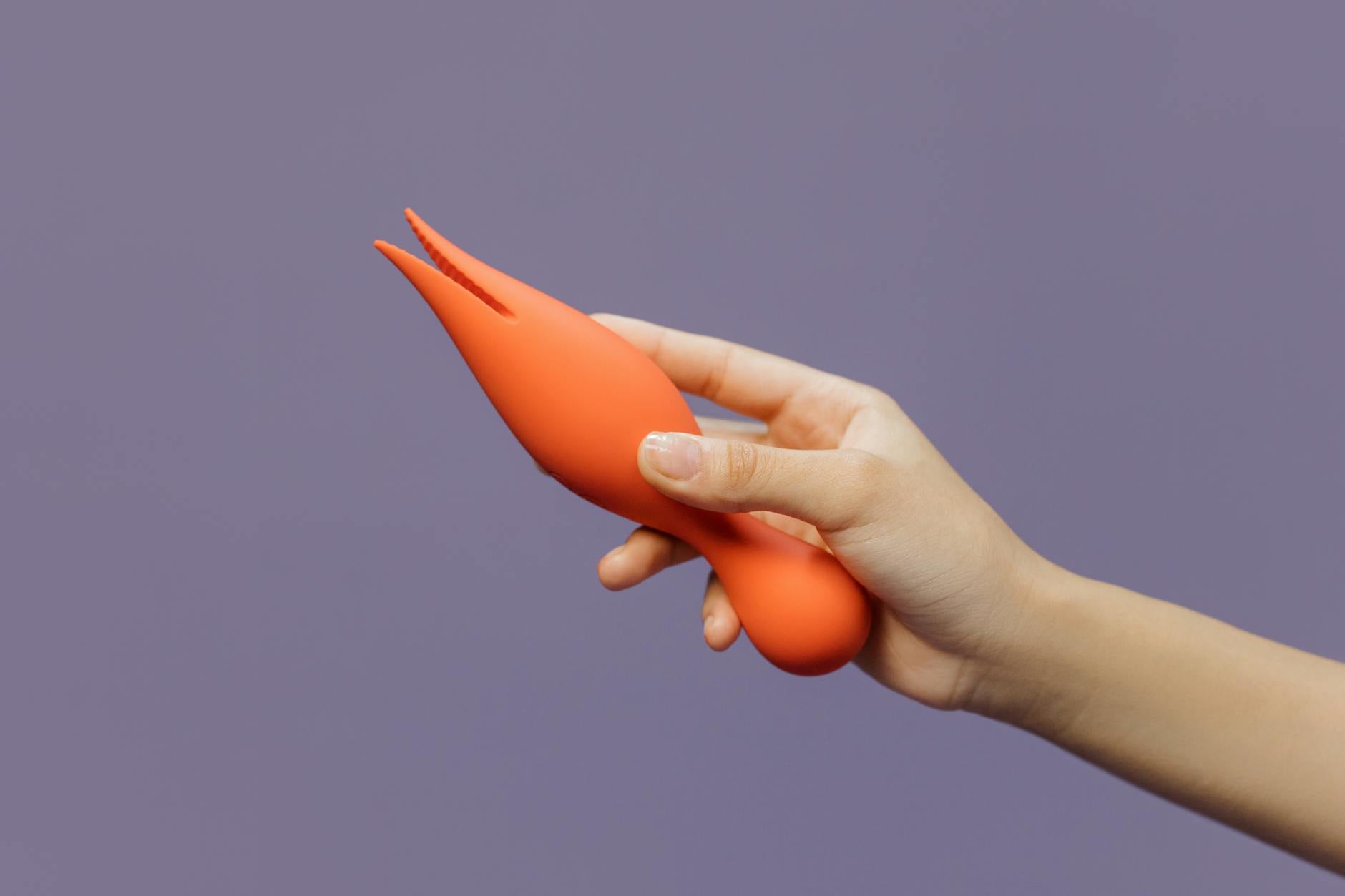
A lemon clitoral vibrator uses air-suction technology instead of direct vibration. Rather than sending rhythmic pulses into tissue, suction creates a gentle expanding and contracting sensation that mimics oral stimulation.
Here's why that matters for people on antidepressants: suction stimulates nerves differently than vibration does. It engages the entire clitoral complex (the external glans, the clitoral hood, the internal bulbs) in a single, unified sensation. It doesn't numb over time because it's not friction-based. And because it feels more like a person than a machine, it can bypass some of the mental barriers that medication creates.
Many of my clients on SSRIs report that suction works when vibration stopped working. Not because the device is "stronger," but because it's a different sensory pathway entirely.
What changes in your arousal timeline
If you've been on antidepressants for a while, you know that arousal feels slower to start. You might not notice you're turned on until much later, or you might feel mentally interested but physically unresponsive.
Suction helps because it provides a different kind of stimulation that can wake up sensation without the mental friction of "why isn't this working?" That mental piece matters. If you spend the first 15 minutes fighting against numbness, you've used up your willingness before arousal even begins.
Start with lower suction intensity. Your threshold for pleasure is currently lower, but your ability to feel is not gone. Many people need to restart their arousal vocabulary entirely. What worked before medication doesn't work now. That's not failure. It's recalibration.
The role of patience and mental state
Medication doesn't just change sensation. It changes anticipation. Depression and anxiety make you doubt your body. SSRIs help your mood but can make you feel disconnected from physical pleasure. That disconnection is real, and it affects how easily you can access arousal.
Before you reach for any device, clear the mental clutter. This is not about forcing pleasure. This is about exploring what your body can do right now, on this medication, in this season of your life. Pressure kills arousal faster than anything.
Photo by cottonbro studio on Pexels
How to use a lemon vibrator with antidepressants
Start with pattern 1 or 2, never maximum. Your nervous system is already working harder to process sensation. Aggressive stimulation will only trigger desensitization faster.
Budget time. Plan for 20 to 40 minutes of exploration. This is not time you're "wasting" if you don't orgasm. This is time you're spending reconnecting with your body's capacity for pleasure. That reconnection matters more than the endpoint.
Use lubrication. Medication can affect natural lubrication, especially if you're on SSRIs for longer than a few months. Water-based lube isn't a band-aid. It's a tool that lets you feel sensation without friction that deadens the area further.
Take breaks between sessions. If you're trying to orgasm every day, your system fatigues. Twice a week gives your nervous system time to reset. More arousal happens in those gaps than in the stimulation itself.
When to talk to your prescriber
If you've been on the same SSRI dose for 3 months or longer and sexual side effects haven't improved, that's worth mentioning. Some doctors will adjust timing (taking the pill after sex rather than before). Some will add a second medication that counters the sexual side effects. Some will switch you to an antidepressant with less sexual impact, like bupropion or mirtazapine.
None of these conversations are easy, but they're normal. Sexual function is part of your health. A prescriber who dismisses it isn't giving you full care.
If you're in a relationship, rebuilding intimacy after a long stretch of disconnected sex can feel like learning a new language. That's okay. Your partner benefits from knowing what's changed and what you're learning. Separate the conversation from blame. "My body is responding differently to stimulation" is different from "I'm not attracted to you anymore." Mixing those confuses everything.
Your libido isn't gone. Your pleasure capacity isn't broken. You're on medication that's keeping you alive, and your body is adapting to that chemical reality. A lemon clitoral vibrator meets your nervous system where it is right now, not where it was before medication. That's the whole point.
FAQ: Antidepressants and Clitoral Arousal
Do all antidepressants affect sexual sensation the same way?
No. SSRIs (sertraline, paroxetine, fluoxetine) and SNRIs (venlafaxine, duloxetine) have the strongest sexual side effects. Bupropion and mirtazapine are less likely to flatten sensation. Tricyclic antidepressants vary. If sexual function is a priority for you, mention it when your prescriber is choosing a medication. The right choice for your mood might not be the same as the right choice for your overall quality of life, and that's worth discussing.
Can lemon suction help if I'm on multiple medications?
Possibly, but the interaction gets more complex. Some medications compound sexual side effects. Others have minimal impact. Some pain medications, antihistamines, and blood pressure meds can also affect arousal independently of antidepressants. If you're on multiple prescriptions, your prescriber or a sex therapist trained in medical sexuality can help you understand which ones are contributing. A lemon clitoral vibrator might help, but the root issue might need a medication adjustment first.
How long does it usually take to see improvement with suction?
Some people notice a difference in the first few sessions. Others take two to three weeks of consistent exploration before sensation starts to normalize. Your timeline depends on how long you've been on medication, your dose, and how your individual nervous system responds. Patience is not optional here. Rushing the process makes it harder.
Is it normal that I feel less aroused after my medication dose?
Absolutely. If you take your pill in the morning, sexual sensation might be lowest in the afternoon and evening. Some people find better results scheduling exploration earlier in the day or adjusting the timing of their dose with their prescriber. Timing isn't a magic fix, but it can help. This is worth discussing with whoever prescribed your medication.
Can I combine a lemon vibrator with my partner during sex?
Yes, and for some couples on antidepressants, adding a clitoral vibrator is exactly what rebuilds the connection. If your partner was used to bringing you to orgasm and medication made that impossible, a lemon vibrator isn't taking anything away from them. It's adding a tool that helps you both succeed. Introduce it as something that might help you feel more, not as a replacement for them.
What if nothing seems to help and I'm still numb?
That's a conversation with a sex therapist or a doctor trained in sexual medicine, not a device problem. Some people find that the numbness improves over time as the body adjusts to medication. Others need a medication change. A few need both. There's no shame in that. Sexual function is complicated when medication is involved, and you deserve expertise that acknowledges that complexity.
The real takeaway
Antidepressants work. They give you your life back. But they change your body's sexual response in real, measurable ways. Understanding how your nervous system works on medication isn't accepting defeat. It's getting smart about what you need to feel pleasure again.
A lemon clitoral vibrator is built for a different kind of stimulation than traditional vibrators. For people on SSRIs or SNRIs, that difference can mean the gap between numbness and sensation. It's not a guarantee. But it's worth exploring with patience, time, and the expectation that your body's pleasure might look different now.
You deserve to feel good. Your medication doesn't take that away. It just changes the map. And sometimes you need a different tool to navigate it. If you have questions about how to move forward, reach out. There's nothing shameful about rebuilding your relationship with pleasure while you're taking care of your mental health.
Sources
Ahad, M., Mustafa, W., Radford, K., & Wylie, K. (2019). Antidepressants and Sexual Function. European Journal of Sexual Medicine, 8(2), 112-124.
Balon, R. (2006). SSRI-Associated Sexual Dysfunction: Possible Mechanisms and Management Strategies. Psychiatric Annals, 36(5), 312-318.
Goldstein, I., & Meston, C. M. (2018). Advancing the Science of Sexual Pleasure. Journal of Sexual Medicine, 15(10), 1329-1338.