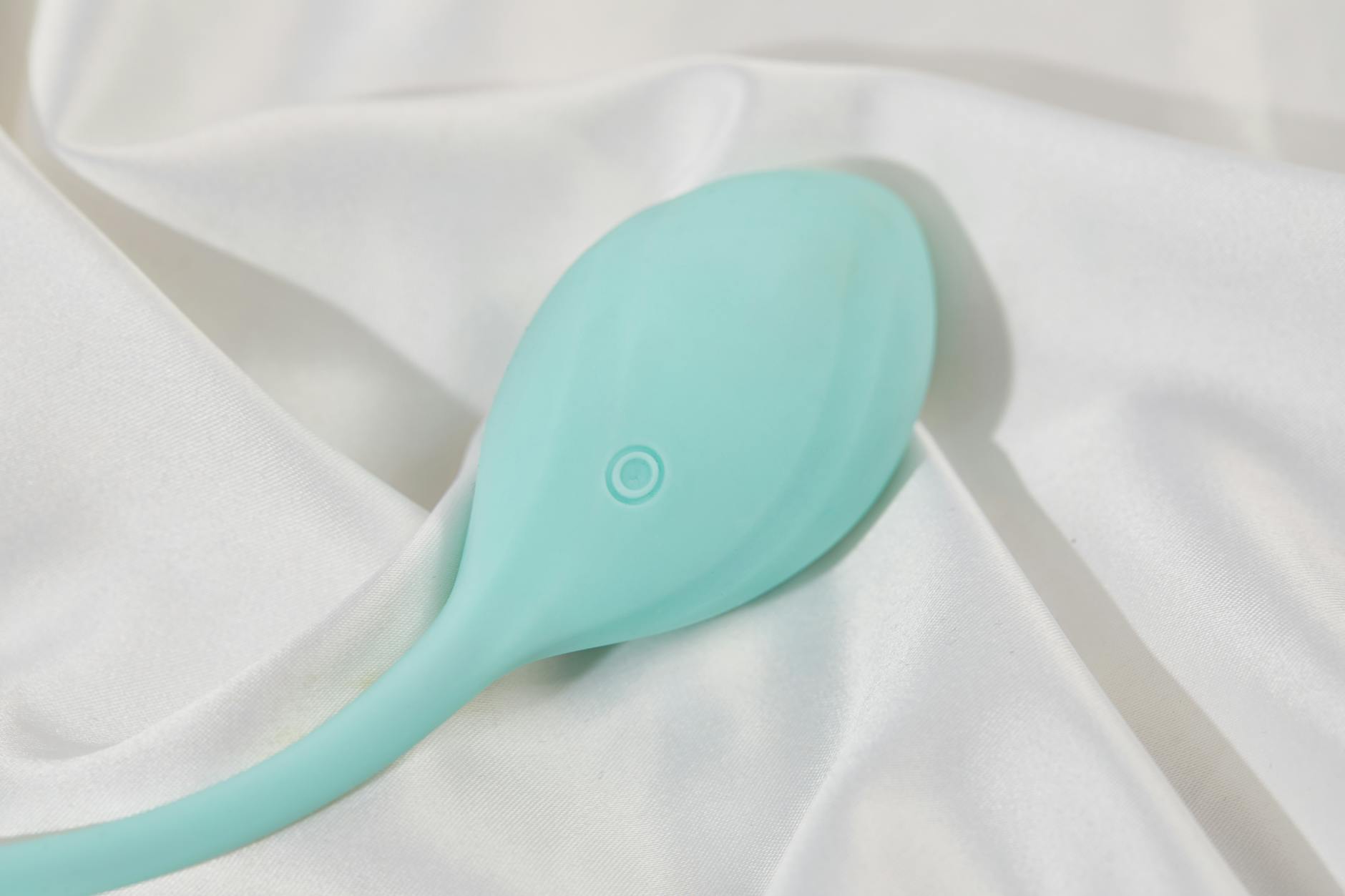
Let's talk about the slowdown that nobody warns you about
Your body used to respond faster. A few minutes of foreplay and you were ready to go. Now it takes longer. Maybe 15 minutes. Maybe 30. Maybe you're not even sure arousal is happening at all until you check in with yourself halfway through.
This isn't laziness. It's not a sign something is broken. It's your nervous system doing what it's supposed to do when you're stressed, distracted, or literally just older and wiser about what turns you on. And the good news? A lemon vibrator designed with air-suction technology actually works better with slower arousal than a traditional vibrator ever will.
Why arousal gets slower (and why it matters)
Arousal speed depends on a few things: hormones, blood flow, mental state, and how quickly your nervous system shifts into parasympathetic (relaxed) mode. All of these change over time, and sometimes all at once.
If you're in your 30s or 40s, stress is probably the biggest factor. If you're post-menopausal, declining estrogen genuinely slows tissue response. If you're in a long-term relationship, the novelty-driven rush of early months gives way to something that requires more intention. None of these are problems. They're just facts.
Here's the critical part: traditional vibrators were designed around faster arousal. They work by creating persistent friction, which means they're most effective once you're already partially aroused. A lemon clitoral vibrator uses suction and pulsing patterns instead. That changes everything about how to time your session.
Reset your timeline expectations first
This is the mental work that makes the physical work possible.
If you're still expecting five-minute arousal, you'll feel like you're failing at 10 minutes. You're not failing. Your nervous system is asking for something different. It's asking for longer foreplay, more mental focus, or both.
Try this: add 15 minutes to whatever timeline used to work. If you had 20 minutes total, plan for 35. Don't rush to penetration or climax. Treat the whole session as the point, not a means to an end. This shift alone unlocks something for most people.
The two-phase arousal approach with your lemon vibrator
Instead of jumping straight to your device on medium intensity, split your session into two phases.
Phase one: manual and external. Spend 10 to 15 minutes on whatever gets your brain online first. Kissing, touch, fantasy, porn, a partner, whatever. The goal is not orgasm. The goal is to get blood flowing to your genitals and signal to your brain that this is happening. You should feel obvious lubrication or know you're becoming interested. This phase makes phase two work.
Phase two: introduce your lemon vibrator slowly. Start on the lowest intensity setting. This is not being wimpy. Suction vibrators work differently than bullet vibrators. You don't need intensity cranked up to feel it. In fact, starting low lets your tissues adjust and prevents that numb-out feeling that kills arousal dead.
Keep your device on a lower setting for at least five minutes in phase two. You're not trying to trigger an orgasm yet. You're training your nervous system to trust the sensation and let arousal build. Most people find that after five minutes on pattern 1 or 2, their arousal actually accelerates. Your body wakes up. Then you can explore higher patterns if you want.
Read your body's speed, not the clock
Once you're 15 minutes into your session, check in. Ask yourself: am I genuinely aroused, or am I just going through motions?
If you're genuinely aroused, keep going. This is your timeline now.
If you're not, stop for a minute. Shift something. Change position. Think about a fantasy or scenario that's worked before. Put on music. The point is that slower arousal sometimes means you need more than just stimulus. You might need context, a story, or a change of environment.
If you're still not connecting after 25-30 minutes of intentional effort, that's okay too. Not every session works. Call it. You didn't fail. Sometimes your body is tired or distracted, and that's just how it goes.
The lemon vibrator advantage for longer warm-ups
This is why a suction-based clitoral vibrator like Hello Nancy's Lem is genuinely superior for slower arousal compared to traditional vibrators.
Traditional vibrators rely on you being already somewhat aroused for the vibration to feel good. Start one on a dry or minimally lubricated vulva and it's uncomfortable or numb. You have to wait until you're ready, then jump to using it.
A lemon sucker creates a gentle seal and applies pulsing suction that feels good from the beginning, even if you're not maximally aroused yet. This means you can introduce your device earlier in your warm-up phase without it backfiring. The sensation itself becomes part of what builds arousal, rather than something that only works once arousal is already there.
Start on pattern 1. You'll probably find that the sensation is pleasant, maybe subtle. As you stay with it, your arousal ramps. By pattern 3 or 4, the exact same device setting feels dramatically more intense because your nervous system has caught up. You haven't changed the toy. Your body has changed its responsiveness.
Lubrication becomes non-negotiable
When arousal takes longer, you're more likely to start before your natural lubrication has fully kicked in.
Water-based lube is your friend here. It's not a sign of failure or dryness. It's a tool that removes friction and lets sensation actually register. Most people find that adding good water-based lube (yes, even if you're producing some natural lubrication) makes everything feel better and reduces the pressure on your body to "perform" lubrication on a timeline.
Apply lube before you start using your lemon vibrator, and feel free to reapply mid-session. The sensation won't change negatively. It'll actually improve.
Solo versus partnered timing
If you're using your lemon vibrator solo, the two-phase approach is straightforward. Phase one is whatever turns you on alone. Phase two is your device.
If you have a partner, this is where communication matters. Tell them: "I need more time to warm up now. It's not about you. It's about my body needing a slower build." Then invite them into that process. Maybe they do phase one with you (foreplay, touch, oral), and then you use your lemon vibrator while they're still present or nearby. Some couples find this incredibly intimate. Others find that the person with the slower arousal prefers solo time with their device and then comes back to their partner. No wrong answer. Just agree on what works.
Common mistakes to avoid
Starting too intense. If you jump straight to pattern 5 or 6 without warm-up, you'll either overstimulate numb tissue or just not feel it right. Start low and work up as arousal builds. Your nervous system will tell you when you're ready for more.
Expecting the same response every time. Your arousal timeline isn't fixed. Stress, sleep, hormones, and context all shift it. Sometimes you'll be ready in 15 minutes. Sometimes it'll take 40. Neither is normal or abnormal. Just roll with it.
Giving up too soon. The temptation when arousal is slower is to assume something is wrong and quit. Give yourself at least 20 to 25 minutes of intentional, focused engagement. Many people find that arousal actually accelerates after that initial phase.
Forgetting about the mental part. Slower arousal often means your brain needs more input. Think about what used to work. Bring that back intentionally. Pornography, erotica, fantasy scenarios, music, ambiance. These aren't crutches. They're part of healthy sexual engagement.
When longer arousal time actually becomes an advantage
Here's what I see in my practice: people who shift their mindset about longer arousal often report better orgasms, more consistent pleasure, and deeper satisfaction overall.
Why? Because slower arousal forces you to stay present. You can't zone out and expect your body to do the work. You have to actually pay attention to sensation, communicate what you need, and adjust as you go. That kind of engagement builds nervous system resilience and, counterintuitively, faster climaxes once you get there.
The lemon vibrator fits perfectly into this frame because suction-based stimulation rewards presence and responsiveness. The more attuned you are to subtle sensation, the more you get from the device.
FAQ: Arousal timing and your lemon vibrator
Why does my arousal take longer now than it used to?
Multiple factors shift arousal speed over time: hormonal changes, stress levels, relationship dynamics, age, and nervous system regulation. If you're in your 30s or 40s, stress is usually the biggest culprit. If you're post-menopausal, declining estrogen genuinely slows tissue response. Neither is abnormal. Both are workable.
Is it normal to need 30 minutes to get aroused?
Yes. Average arousal onset ranges widely, and individual variation is normal. For some people, 30 minutes is typical. If arousal used to come faster and has slowed significantly, that's worth paying attention to (stress, medication changes, or relationship shifts might be factors). If 30 minutes is just how your body works, there's nothing wrong with that. Plan your sessions accordingly.
Should I use lube even if I'm producing natural lubrication?
Absolutely. Water-based lube isn't about dryness or failure. It's about optimizing sensation. Many people find that adding lube improves comfort and pleasure, regardless of natural lubrication. Use it freely.
Can I use my lemon vibrator during the arousal phase, or should I wait until I'm already turned on?
You can start earlier than you might with a traditional vibrator. The suction design works on partially aroused tissue in a way that friction-based vibrators don't. Start on a low pattern and let the sensation build arousal. You don't have to be fully ready first.
What if I'm still not aroused after 30 minutes?
Take a break. Not every session works. Fatigue, stress, distraction, or hormonal factors can all prevent arousal on a given day. This is normal. Try again another time when your body and mind are in a different state. Forcing it rarely works.
Does slower arousal mean I need to see a doctor?
Only if it's a sudden, dramatic change paired with other symptoms (pain, spotting, mood changes). If you're gradually noticing slower arousal over months or years, that's usually age, stress, or relationship dynamics, not pathology. If you're concerned, a conversation with your GP is always reasonable, especially around hormonal or medication changes.
The bottom line
Slower arousal isn't a failure. It's an invitation to slow down, pay attention, and actually enjoy the process instead of rushing through it. A lemon vibrator, with its gentle suction design, pairs beautifully with this slower timeline. Start low. Build gradually. Trust your body's pace. And remember: the best session isn't always the fastest one.
If you want more guidance on technique or you're struggling with arousal changes in a relationship context, reach out. You deserve pleasure that works with your body, not against it. Visit our contact page to connect with us.