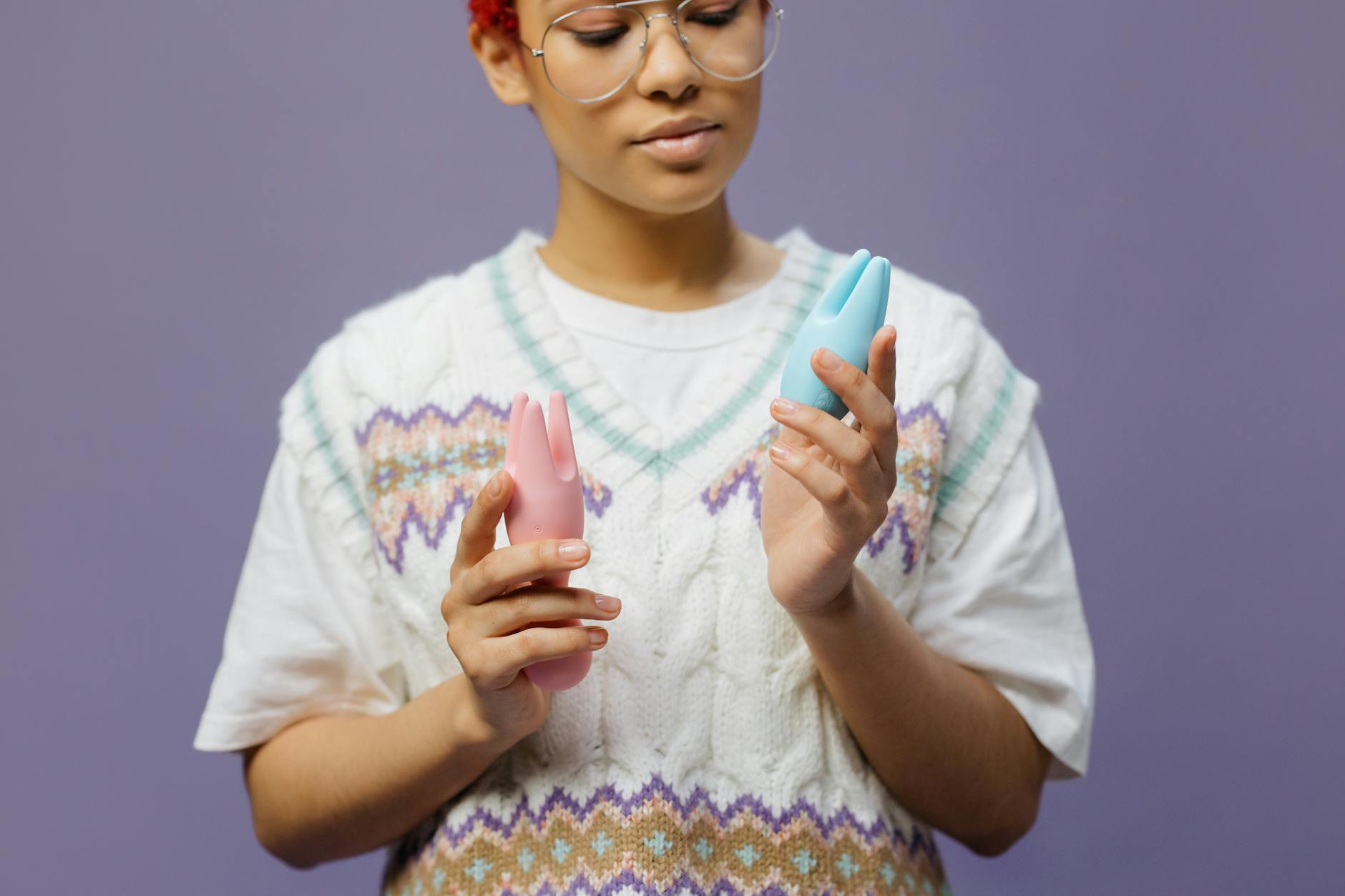
After months or years of long-distance, the body forgets. Not love. Not desire. But the rhythm of touch, the ease of physical closeness, the way arousal builds when someone is actually in the room. Your nervous system has rewired itself around absence. When that absence ends, reconnection doesn't just happen. It needs to be rebuilt, slowly and deliberately.
This is where a lemon vibrator shifts things. It's not about replacing your partner's touch. It's about creating a bridge back to sensation when the body needs permission to remember.
Your nervous system is a habit-forming machine. Months of video calls and text create a particular kind of arousal pattern. Your brain learns to fantasize without physical presence. Your body learns to experience desire in isolation. Touch becomes theoretical.
When you're finally together again, something feels off. You might feel awkward. You might not get wet the way you usually do. You might feel like you're performing arousal instead of feeling it. You're not broken. Your nervous system just needs a re-entry point.
This is especially true if the long-distance stretch was long. A partner once told me that after 18 months apart, the first time they tried to have sex together, she felt completely numb. Not in an emotional way. In a literal neurological way. Her brain was struggling to shift from fantasy mode into presence mode. A lemon sucker helped her body remember what receptive pleasure felt like.
A lemon clitoral vibrator works for reconnection in three specific ways.
First, it lowers the pressure on penetration. When you're reconnecting, the temptation is to move straight to sex as proof that the relationship is back on solid ground. That's pressure neither of you needs. Using a lemon vibrator or other clitoral toy shifts the focus to her pleasure specifically, which gives both of you permission to slow down.
Second, air-suction toys like the Lem work with your body's nervous system rather than against it. Penetrative sex requires a certain kind of readiness that your body might not be ready to give yet. Suction stimulation is gentler, more focused, and doesn't require the same level of muscular engagement. It feels different from your partner's hands or body, which is actually an advantage. It's a new signal to your nervous system, one that says: this is safe to feel good about.
Third, it creates a shared activity that's explicitly about pleasure, not obligation. You can use it together. Your partner can watch. You can guide them on speed and intensity. This is a conversation without words, and it rebuilds trust faster than trying to navigate what used to work when you're both uncertain.
Start with the understanding that awkwardness is normal. You might laugh. You might feel self-conscious. This is fine. It's actually part of reconnection. You're relearning each other, and that learning has some fumbling in it.
Before you use anything, talk about what you both want the session to be. Not a goal of orgasm. A goal of sensation. Something like: "I want to feel pleasure in my body again with you here." That single sentence removes the performance pressure.
When you use a lemon clitoral vibrator for the first time together, start on the lowest setting. Most people skip this step and jump to settings 3 or 4, which is fine if you're used to vibrators, but if you've been in isolation for a long time, your body might need time to recalibrate. Low settings feel more like touch than stimulation. Let your nervous system ease in.
If your partner is there, they can hold the vibrator. Or you can. There's no single right way. What matters is that the experience feels collaborative, not clinical. Talk during it. Say what feels good. Say what feels like too much. This conversation is what rebuilds the physical language you had before distance.
One thing that surprises people: sometimes the clitoris feels extra sensitive after a long separation. This happens because the tissue hasn't been receiving regular stimulation, and your nervous system is primed from months of fantasy. That heightened sensitivity is not a problem to solve. It's a feature of reconnection.
But it does mean you might feel overstimulated faster. Start light. Move slowly. You can always increase intensity. You can't un-ring a bell if you go too hard too fast.
Some people find that using a lemon vibrator alone first, before partnered sex, helps them recalibrate in private. There's no shame in this. Your body needs to remember what responsiveness feels like. Solo exploration gives your nervous system that chance without the social component of having someone watching.
Once you've used a clitoral vibrator on your own and felt your body respond, partnered use feels less fraught. You already know you can still feel things. You already know your body works. Now it's just a matter of practicing that together.
Long-distance changes more than just touch. It changes how vulnerable you feel about your body. After months of only text and video, some people feel less sexy. Less desirable. Less relevant. This is particularly true for women who internalize the distance as personal rejection, even when the distance was circumstantial.
A lemon clitoral vibrator is useful here because it puts pleasure back in your hands. Literally. Using it with your partner is a statement: my pleasure matters, and we're rebuilding this together. That shift in agency, from performing for your partner to directing your own pleasure, changes the whole reconnection narrative.
This is also why it matters that a lemon vibrator is beautiful. Get Lemon Vibrators makes toys that don't look clinical. They look like something you'd want to touch, keep visible, be proud of. That aesthetics matter more than people admit, especially when you're rebuilding intimacy after trauma or distance.
Reconnection isn't a single session. It's a process. You might use a lemon clitoral vibrator in week one, then find you don't need it as much in week three. That's exactly right. The tool is there to bridge the gap while your nervous system recalibrates. Once you've rebuilt the neural pathway for partnered pleasure, you might shift back to other types of intimacy.
Or you might find that you love using a lemon vibrator as part of your regular sex life going forward. Some couples integrate this into a rhythm. Some use it as foreplay. Some use it as the main event. There's no final destination.
What matters is that you're both showing up with curiosity instead of pressure. A tool like a lemon sucker helps with that because it takes the focus off performance and puts it on sensation.
If you've used a lemon vibrator and still feel completely numb, or if touch feels painful rather than pleasurable, that's worth discussing with a therapist or sex coach. Long-distance sometimes unearths other relationship issues, and those are important to address.
Similarly, if your partner is resistant to your pleasure or dismissive of toys as a bridge back to intimacy, that's information about the relationship that matters more than any single session. A tool helps, but it doesn't fix a fundamental mismatch in how you both view pleasure.
Most of the time, though, reconnection after long-distance is less dramatic. It's awkwardness that softens. It's sensation that slowly returns. It's two people remembering why they chose each other in the first place, and using every resource available to make that easier.
Most people notice a shift within 2-4 weeks of being in the same place. That said, "normal" is a moving target. Intimacy after long-distance often feels richer than before, because you're more intentional about it. Don't rush the process. Your body knows its own timeline.
No. It's actually one of the least weird times to introduce a toy into partnered sex. You're both already in a state of intentional reconnection. Adding a tool that focuses on her pleasure fits naturally into that conversation. Many couples find that toys make reconnection easier, not weirder.
Lemon vibrators, particularly air-suction models like the Lem, work well for reconnection specifically because suction feels different from what you've experienced with hands or conventional vibrators. That novelty can help your nervous system shift out of isolation mode. But any toy that focuses on clitoral pleasure can help. Pick what feels right for you.
That's worth a conversation, not a compromise. Ask what his concern is. Is it about masculinity? About feeling replaced? About not knowing how to use it? Those are different problems with different solutions. Using a toy doesn't diminish his role. It's an addition. But if he's genuinely opposed, pushing it will create distance, not reconnection.
Tools can support reconnection, but they can't replace the deeper work. If the long-distance period included betrayal, resentment, or significant emotional hurt, pleasure might not be the first thing you need to rebuild. Honest conversation about what happened and whether you both want to move forward comes first. A vibrator is useful once you've done that work.
Honestly. Try something like: "I've been thinking about how different it'll feel to be physical again after this long. I'd love to explore that together, maybe with something new. Would you be open to that?" Framing it as joint exploration, not about what's wrong with either of you, makes it easier to hear.
Long-distance relationships teach you something: you chose each other. You chose to stay connected even when it was hard. That's the foundation you're rebuilding on.
Using a lemon vibrator or other clitoral toy in that reconnection isn't about fixing anything broken. It's about honoring the complexity of your bodies and your relationship. It's a tool that says: pleasure matters, your pleasure matters, and we're both willing to be curious about how to create it together.
The reconnection process is tender. Be gentle with yourselves. Feel what comes up. Use every resource you have, including beautiful, intentional toys that help your nervous system remember what pleasure with another person feels like. You've already done the hard work of staying connected across distance. This part is about joy.