The anxiety trap nobody talks about
Let's be real. Sex anxiety doesn't announce itself as "I'm preventing your orgasm." It whispers. It shows up as distraction, as a sudden urge to check your phone, as tension in your shoulders you didn't notice until midway through. By then, arousal has already left the building.
Here's what makes this particularly frustrating: you know your body is capable of pleasure. You've felt it before. But somewhere between your brain recognizing the setup for sex and your nervous system actually relaxing into it, something derails. Performance pressure, fear of being judged, worry about taking too long, intrusive thoughts about whether your partner is bored. The specific flavor doesn't matter. The result is the same. Your arousal gets trapped behind a wall of what-ifs.
This is where a lemon vibrator changes the game. Not because it's magic, but because it works with your nervous system rather than against the anxiety feedback loop.
Why standard tools don't help (and why it matters)
Most vibrators demand speed or intensity from you. They reward arousal that's already building. But when anxiety is running the show, you don't have arousal that's building yet. You have a nervous system that's still in fight-or-flight mode.
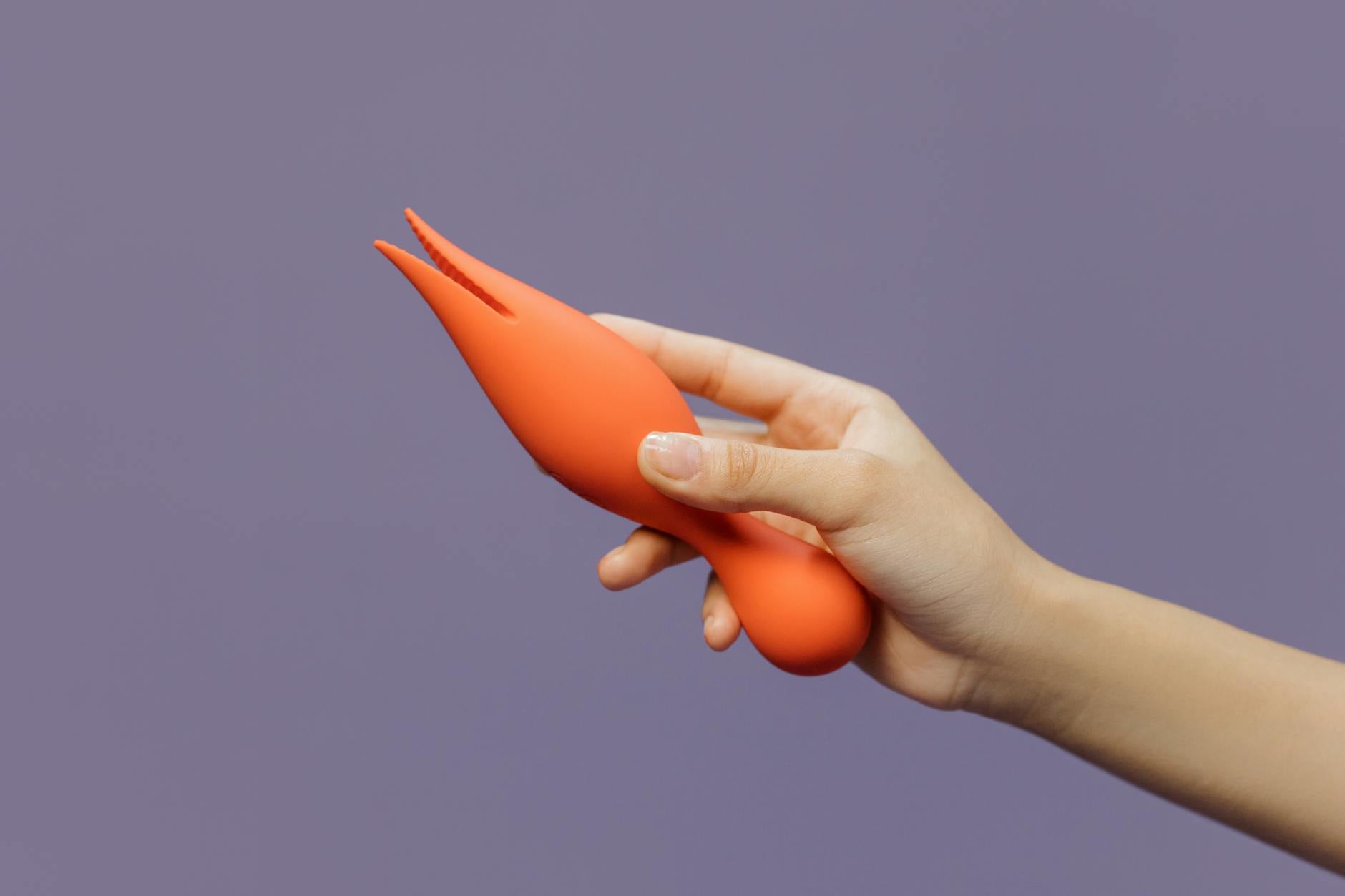
The suction-based design of lemon vibrators like the Lem works differently. Instead of requiring friction stimulation, suction creates a gentler, more diffuse sensation that feels less like pressure to perform and more like permission to relax. Here's why this matters physiologically.
When you're anxious, your nervous system is primed for threat detection. Direct, intense vibration can read as more stimulation to process, which keeps you in that hyperalert state. Suction, by contrast, creates a rhythmic, almost meditative sensation. It doesn't require your brain to do anything except notice it. Over time, that paradoxical permission to just feel without striving actually allows your nervous system to downshift.
The three-stage reset: how to use a lemon vibrator when anxiety is blocking arousal
Stage One: Nervous system prep
Don't jump straight to pleasure. Start with regulation. Spend 10-15 minutes doing something that signals safety to your body: a warm shower, slow breathing, gentle stretching, or even just sitting with a cup of tea while your body acclimates to the idea that this is a low-stakes exploration, not a performance evaluation.
This matters because anxiety doesn't release on command. You're not weak for needing transition time. Your nervous system genuinely needs permission to switch modes. When you skip this step and go straight to the vibrator, you're essentially asking your body to downshift gears while the engine is still running hot.
Stage Two: The exploration phase
This is the critical piece. Start with the lemon vibrator on the lowest pattern, and don't aim for arousal. That sounds backward, but it's the actual antidote to anxiety. Your only job right now is to notice sensation without judgment. Where does the suction feel strongest? Which pattern creates the steadiest rhythm? Does it feel better in a particular position?
Notice I didn't ask if it feels good. That's deliberate. "Good" comes with expectations. "Interesting" doesn't. When you're in exploration mode, you sidestep the performance trap entirely. You're gathering data, not chasing results.
Most people find that within 5-10 minutes of this low-stakes exploration, their nervous system actually starts to relax. The rhythm becomes almost meditative. That's when arousal can start building, and it happens almost as a side effect, not as the goal.
Stage Three: Permission to intensify (or not)
Once your body has settled into the sensation, you have a choice. You can gradually increase patterns on your lemon vibrator if you want to. Or you can stay with what feels good and let intensity happen organically. The point is that by this stage, you're no longer fighting your own nervous system.
Some people find that just knowing they can dial up intensity gives them permission to enjoy what's already happening. Others discover that slower patterns are actually more satisfying than they expected. Both are correct.
The role of self-compassion (yes, really)
Here's something therapists know but don't always say directly: anxiety during sex often contains an element of shame about the anxiety itself. You feel anxious, then you get frustrated that you're anxious, then that frustration becomes its own layer of tension.
When you're using a lemon vibrator to work with arousal anxiety, the structure of the device actually supports self-compassion in a practical way. Because suction creates such a gentle, rhythmic sensation, it's harder to judge yourself harshly while experiencing it. It's hard to be critical of your performance when the sensation itself is inherently low-pressure.
That shift matters more than you'd think. Over time, your body learns that pleasure doesn't require you to perform. It just requires you to show up and pay attention. That's a profound reorientation of the nervous system.
When to bring a partner into the mix
If you're in a partnered situation, the hardest part is usually the conversation beforehand. Here's what I'd say: "I want to try something with my own device that helps my nervous system relax. This isn't about you. It's about me figuring out how to bypass some anxiety that's been in the way. I might want you in the room, or I might want privacy. Either way, I'll let you know what I need."
That clarity prevents your partner from internalizing the anxiety as rejection. It frames the lemon vibrator as a tool for your own nervous system regulation, not as a replacement for them.
Once you've done the solo work and your body has learned that pleasure is accessible even when anxiety shows up, partnered sex often shifts naturally. You know the feeling you're reaching for. Your nervous system has a map. That changes everything.
The patience factor
Anxiety didn't develop overnight, and it won't resolve in one session. This is worth saying directly because our culture loves quick fixes. Your nervous system is genuinely trying to protect you by staying hypervigilant. That's a feature, not a bug. It just happens to be overactive in this context.
Using a lemon vibrator to work with arousal anxiety is a practice, not a one-time intervention. Some people notice a shift within a few sessions. Others need weeks of gentle, consistent practice before their nervous system stops treating pleasure like a threat. Both timelines are normal.
The win isn't the first time you orgasm while using a lemon vibrator. The win is the moment you notice that you're thinking less about whether it's working and more about the actual sensation. That's your nervous system finally downshifting. Everything else follows from there.
Common friction points (and how to handle them)
If you're finding that even with a lemon vibrator you're still stuck in your head, the issue is usually one of these: you're not giving yourself enough transition time before starting, you're on too high a pattern too quickly, or you're still holding a goal of orgasm as success. Most people need all three to shift.
Some also find that setting boundaries around timing helps. Instead of open-ended exploration, set a timer for 15 minutes. Knowing there's an endpoint somehow makes it easier to relax into the middle. Your brain stops scanning for productivity and just settles in.
If anxiety about the device itself is present, that's worth exploring separately. A lemon clitoral vibrator is a tool, but it's also a physical object that exists in your body's space. Some people need time to get comfortable with the sensation before anxiety can release. That's fine. Familiarity builds trust.
Why this actually works neurologically
When you use a lemon vibrator in this intentional way, you're not fighting your nervous system. You're gradually retraining it. Each time you experience pleasure without performance pressure, your body collects evidence that arousal doesn't require you to be perfect or fast or even totally confident.
That evidence compounds. After enough repetitions, your nervous system starts to predict safety instead of threat when sex is on the table. The anxiety doesn't vanish, but it stops blocking arousal before it can start. You can feel both the anxiety and the sensation simultaneously, and increasingly, the sensation becomes the louder signal.
That's the actual neurological shift. And that's why this approach works where sheer willpower doesn't.
FAQ: Sex Anxiety and Lemon Vibrators
Can a lemon vibrator actually reduce sex anxiety, or does it just distract from it?
It's both, and that matters. In the moment, yes, the sensation provides something to focus on besides anxious thoughts. But more importantly, repeated positive experiences of arousal without performance pressure genuinely recalibrate your nervous system's threat response. Over time, you're not just distracted. You're retraining your brain's association with sex from "threat" to "safe." That's a real neurological shift, not just a clever workaround.
What if I feel more anxious when using the vibrator?
Some people initially feel more anxious because they're paying closer attention to their body and their thoughts. That's not failure. That's actually the nervous system noticing what was already there. If this happens, zoom out. Use it for just 5 minutes instead of 15. Focus on breathing instead of sensation. The goal is gentleness, not pushing through discomfort. If anxiety persists significantly, talking with a therapist who specializes in sexual anxiety is worth considering.
Should I use a lemon vibrator alone or with my partner when working through anxiety?
Start alone. Your nervous system needs to learn that pleasure is accessible without anyone watching or judging. Once your body has internalized that, partnered use becomes a choice instead of a performance. Many people find that solo exploration with a lemon vibrator actually improves partnered sex because you know what works for your body and you're not stuck in your head about what they're thinking.
How long does it take before anxiety stops blocking arousal?
That's individual. Some people notice a shift within a few sessions. Others need weeks or months of consistent practice. The key is not to rush it. Your nervous system is being rewired, and that happens on biological time, not willpower time. Patience here is actually the accelerator, not the brake.
Can medication for anxiety change how a lemon vibrator feels?
Some medications do alter sensation or arousal. If you're on antidepressants or anti-anxiety meds, that's worth discussing with your doctor or therapist. That said, many people use lemon vibrators effectively while medicated. The device doesn't conflict with most medications. It's just worth knowing what you're working with.
What if the anxiety is tied to past trauma?
That's a different layer entirely, and it deserves professional support. A lemon vibrator can be part of a healing process, but it shouldn't be your only tool. Working with a trauma-informed therapist who specializes in sexual healing is important. That person can help you figure out whether solo device use is grounding or triggering, and how to integrate it safely into your recovery.
The bigger picture
Using a lemon vibrator when sex anxiety is blocking arousal isn't about forcing pleasure. It's about creating conditions where pleasure can emerge naturally. Your nervous system isn't broken. It's just being protective in a situation where protection isn't needed anymore.
The gentleness of suction-based stimulation, combined with the structure of exploration-focused practice, gives your body a way to learn that pleasure is safe. That shift, accumulated across multiple sessions, is what actually changes the game.
If you're ready to explore this, start with patience. Your nervous system will catch up.