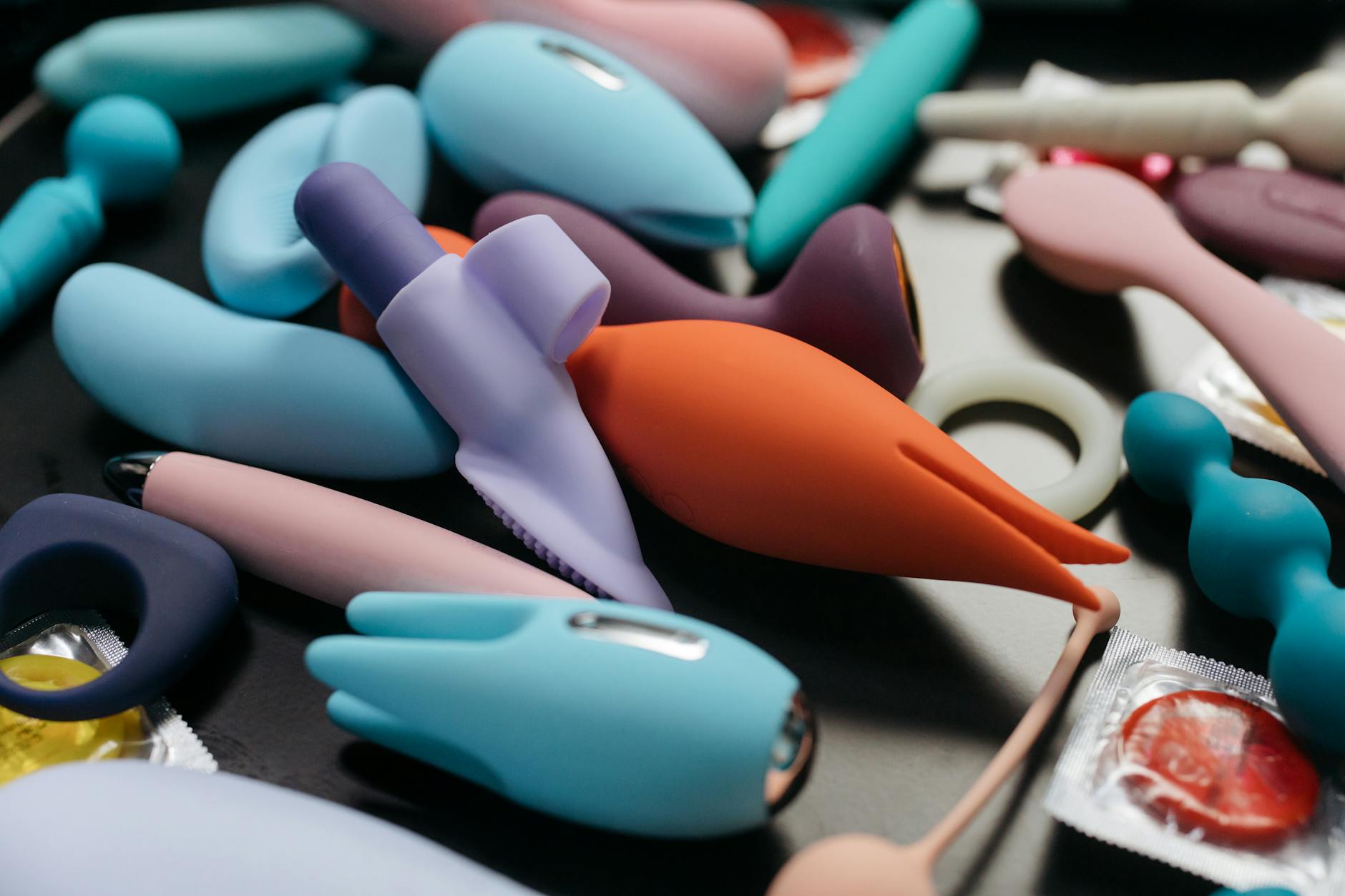
Let's be direct: SSRIs work. They stabilize serotonin, they quiet the noise in your head, and for many people they're the difference between surviving and actually living. That said, one of the most common side effects nobody warns you about is sexual dysfunction. It sneaks in quietly. Your orgasms take longer. Sensation feels muted. Sometimes they don't arrive at all.
Serotonin doesn't just regulate mood. It also controls dopamine and norepinephrine, the neurotransmitters that fire during sexual arousal and orgasm. When you raise serotonin to treat depression or anxiety, you're often dampening the very neurochemical cascade that drives pleasure. It's a genuine trade-off, not something you're imagining.
Here's what changes physically:
Delayed or blunted orgasm. Your brain takes longer to register sensation. The orgasmic response, which depends on a precise sequence of neurological events, gets slowed down or flattened. Some people experience anorgasmia, where orgasm becomes nearly impossible despite arousal.
Reduced genital sensation. The nerves that feed sensation to your clitoris, vulva, and deeper tissues aren't damaged. But the signal traveling to your brain gets quieter. It's like someone turned down the volume on your own nervous system.
Slower arousal. You might find yourself needing more time, more consistent stimulation, or more mental engagement to become aroused at all. This is especially true in the first few weeks of starting an SSRI or after a dose increase.
The honest part: for about 40 percent of people on SSRIs, sexual side effects persist. They don't always disappear with time.
Many SSRIs are taken once daily, usually in the morning. Some people have better luck with their pleasure in the 12-24 hours after they've just taken the dose. Others notice the opposite. If you're in a relationship or have a consistent solo practice, it's worth tracking when you feel most responsive.
One strategy: talk to your prescriber about taking your dose right after sex or masturbation, rather than before. The timing might shift when the medication peaks in your system relative to when you want to be intimate. This isn't a hack that works for everyone, but it's worth asking about.
Don't stop taking your medication or skip doses to improve your sexual response. The rebound anxiety or depression isn't worth it, and it destabilizes your treatment.
This is where air-suction devices like lemon vibrators become genuinely useful. Here's why:
They bypass the threshold problem. When SSRIs dull sensation, you often need stronger or more sustained stimulation to reach orgasm. A lemon vibrator's suction pattern creates intensity without the direct friction that can numb sensitive tissue further. The pattern also engages a different set of nerve fibers than traditional vibration alone, which can help you circumvent some of the dampening.
They reward patience. Because orgasm takes longer on SSRIs, you need sustained, reliable stimulation. The Lem and other lemon suction toys are designed for extended use without causing fatigue or soreness. You can stay with one pattern for 20, 30, or 45 minutes without your hand cramping or the sensation becoming painful.
They work with your timeline. If your arousal takes longer to build, you might spend the first 15 minutes exploring at low intensity, then gradually increase the pattern. Suction-based stimulation lets you do this gradually without the jumping-around intensity some traditional vibrators force on you.
Many of my clients who are on SSRIs report that they only experience reliable orgasm with a lemon clitoral vibrator, whereas traditional vibrators or partner touch alone don't cut through the neurochemical fog. That's not a failure on your part. That's you working with your body's actual needs.
Here's what nobody talks about: some of the pleasure loss with SSRIs is neurochemical, and some of it is psychological. When you've had a few attempts at orgasm that fail, you start bracing. You anticipate the difficulty. That anticipation itself dampens arousal further.
My role in couples therapy is often to help partners understand that this isn't about attraction or desire. Your partner isn't less appealing. Your brain chemistry has shifted. Separating those two conversations saves so much heartbreak.
If you're with a partner, the most useful thing you can do is: (1) acknowledge it's happening, (2) agree it's about medication, not the relationship, and (3) shift expectations around solo practice. When you're alone, you have permission to take whatever time you need without performance pressure. That permission itself usually makes pleasure more accessible.
If sexual side effects are significant enough to affect your quality of life, bring it up. There are real options:
Dose adjustment. Sometimes lowering your SSRI dose by 50 mg improves sexual function without sacrificing mood stability. This has to be done gradually and under supervision, but it's worth discussing.
Timing adjustment. As mentioned, taking your dose at a different time of day might shift when the medication peaks relative to your intimate life.
Adding something else. Buspirone, bupropion, or sildenafil (Viagra) are sometimes added to counteract sexual side effects. This isn't standard practice everywhere, but it's legitimate and worth asking about.
Switching medications. Some SSRIs (particularly sertraline and paroxetine) carry higher rates of sexual dysfunction. Fluoxetine or escitalopram sometimes feel different. This requires careful planning with your prescriber, but it's an option.
None of these changes are quick or guaranteed. But they're real conversations to have.
If you're on an SSRI and want to restore pleasure, here's what I recommend:
Give yourself time. Your first orgasm on a new medication or new dose might take 30 or 45 minutes. That's normal. Stop checking the clock.
Solo practice first. Before bringing a partner back in, spend a few weeks exploring what your body actually responds to now. A lemon clitoral vibrator and headphones with your favorite playlist can help you learn your new rhythm without external pressure.
Communicate with your partner about expectations. "This isn't about us" is the sentence that matters most. Say it, repeat it, believe it.
Consider your arousal context. On SSRIs, your mind matters more. What story are you telling yourself? What headspace helps? For some people it's erotica. For others it's meditation first, then touch. For others it's humor and lightness.
Use tools that match your timeline. Air-suction lemon vibrators are genuinely better suited to extended, building stimulation than traditional vibrators. That's not a judgment on traditional vibrators. It's just a better match for what your nervous system needs right now.
Taking an antidepressant doesn't mean goodbye to pleasure. It means learning what pleasure looks like for your medicated nervous system. And honestly? That learning process often leads to more intentional, more satisfying intimacy than you had before. Because you're not assuming anymore. You're asking. You're exploring. You're working with your body instead of against it.
Can you take Viagra or Cialis while on antidepressants?
Yes. Sildenafil (Viagra) and tadalafil (Cialis) work on blood flow, not serotonin, so they don't interfere with your SSRI. Some prescribers add these when sexual side effects are significant. They work better for some people than others, but they're safe to combine.
Do sexual side effects from SSRIs go away over time?
Sometimes. For about 40 percent of people, the side effects persist no matter how long you've been on the medication. For others, they improve over weeks or months as the body adjusts. There's no way to predict which camp you'll be in without waiting and seeing. If they don't improve, dosing adjustments or switching medications might help.
Will switching to a different antidepressant solve this?
Maybe. Some SSRIs carry lower sexual side effect rates than others. But switching involves tapering one medication and building up another, which takes weeks and carries its own risks. It's worth discussing with your prescriber, but it's not a quick fix.
Do lemon vibrators work better than regular vibrators for people on SSRIs?
Many people report that they do. The suction pattern engages different nerve pathways than traditional vibration. But individual experiences vary wildly. Some people find regular vibrators work great. Try what appeals to you. A lemon clitoral vibrator is worth exploring if traditional toys haven't been reliable.
Is it normal that I need way more stimulation than I used to?
Completely normal. Your nervous system's threshold for sensation has changed. That's not weakness or dysfunction. That's just your medicated body asking for something different.
Can I stop taking my antidepressant to get my pleasure back?
Please don't. The rebound depression or anxiety will almost certainly feel worse than the sexual side effects. Work with your prescriber on adjustments instead. There are real solutions that don't involve sacrificing your mental health.
If you're on an SSRI and struggling with pleasure, you're not broken. Your neurochemistry shifted. Your body is asking for different tools, different timing, different approaches. A lemon clitoral vibrator, adjusted timing with your medication, honest conversations with your prescriber and partner, and patience with yourself can all help. And sometimes, the pleasure you rebuild on the other side of this adjustment feels more intentional, more grounded, and more genuinely yours than anything that came before.