Let's be real about your cycle and pleasure
Your body isn't the same on day 3 as it is on day 17. That's not weakness or broken sensitivity. That's biology doing exactly what it's designed to do. And if you've noticed that your lemon vibrator (or any clitoral vibrator) feels wildly different at different points in your cycle, you're not imagining it. The sensation, intensity, recovery time, and even the type of stimulation that works best genuinely shifts with your hormones.
Here's what most people don't know: that variance isn't something to work around. It's something to work with. Understanding your arousal cycle doesn't just make pleasure more reliable. It can completely transform how you experience your body.
The four phases and what changes
Your menstrual cycle moves through four distinct phases, and each one affects how your clitoral vibrators feel and what your body responds to best.
Menstruation (days 1-5 roughly). Estrogen and progesterone are both at their lowest. Your pelvic floor is often slightly more sensitive, which means stimulation can feel sharper or more intense than it will later in your cycle. Interestingly, some people find orgasms come faster during this phase because the blood flow to your genitals is already elevated. Others find anything beyond gentle stimulation uncomfortable. The clitoral hood might feel more swollen, which can mean direct sensation from a lemon vibrator feels more intense. If this is you, try lower intensity settings or broader stimulation patterns rather than pinpoint suction.
Follicular phase (days 6-12). Estrogen rises steadily. You'll notice your baseline arousal climbing, lubrication improving, and your sensitivity to clitoral stimulation becoming more nuanced. This is when many people find that clitoral vibrators work fastest and most reliably. Your tissue is more plump and elastic, which means sensation transmits more clearly. If you struggle with numbness from vibrators at other times of the month, this is often your sweet spot. You might find you want stronger patterns or faster speeds than you would during menstruation.
Ovulation (days 13-15). This is the peak arousal phase. Estrogen peaks, testosterone surges, and your entire system is primed for sensation. Your sensitivity is at its highest. You might orgasm more easily and with more intensity. Here's the thing: less is often more during ovulation. That lemon vibrator setting you usually run at setting 3 or 4? Setting 1 or 2 might actually feel more intense right now because your nerve sensitivity is heightened. Overstimulation is real, and it happens most during this phase.
Luteal phase (days 16-28). Progesterone rises after ovulation, and everything inverts. Your baseline arousal drops. Lubrication decreases. Your pelvic floor becomes less responsive to stimulation. Orgasms take longer to reach and feel less intense. Sensitivity flattens a bit. This is when many people report feeling "numb" to vibrators or struggling to feel pleasure at all. It's not that something is wrong. It's that your hormonal environment has changed dramatically. You'll usually need higher intensity, longer warm-up time, and potentially different stimulation patterns than you would during your follicular phase or ovulation.
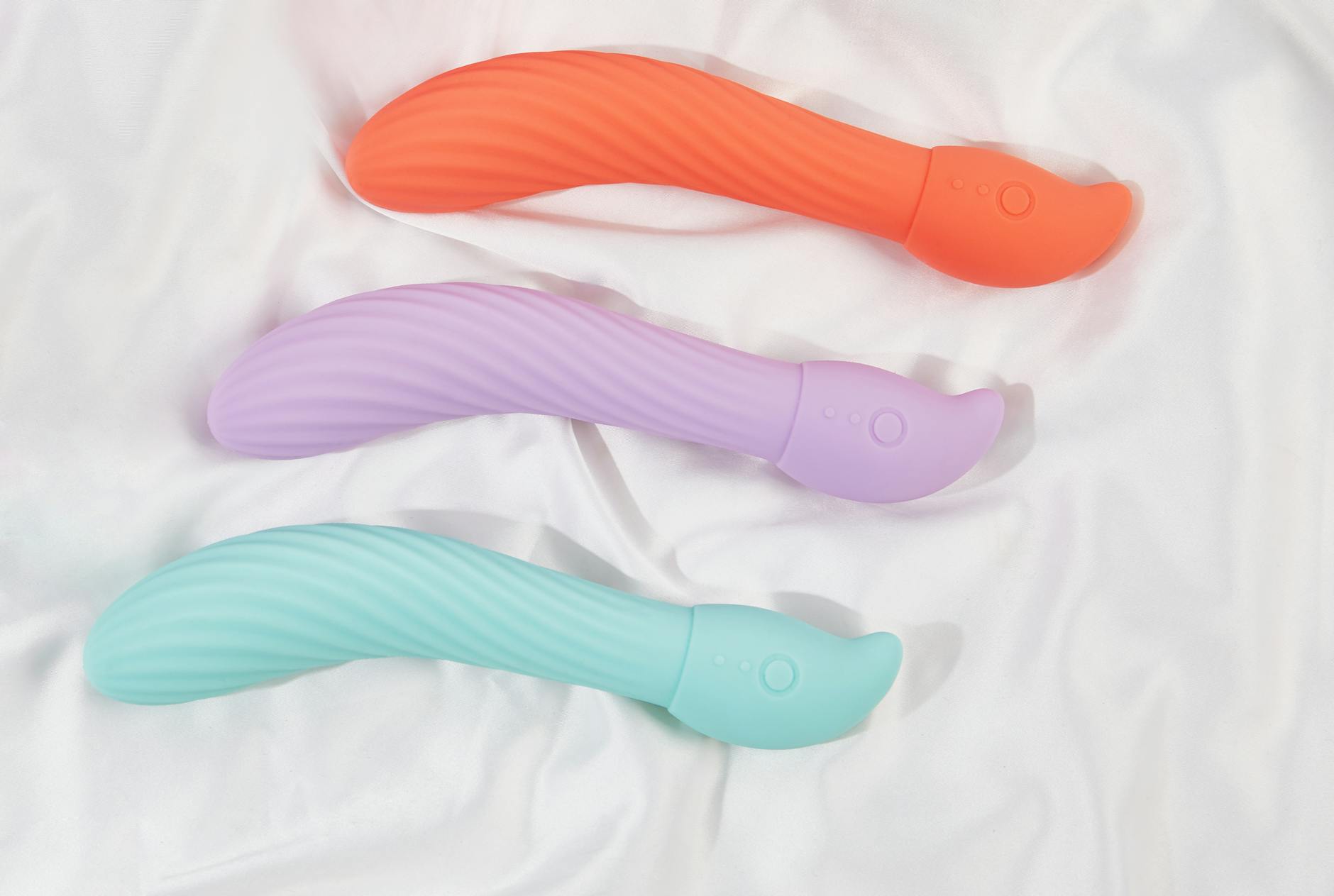
Photo by IFONNX Toys on Pexels
Why sensation intensity actually changes
This isn't just psychological. There are three main mechanisms at work.
First, estrogen makes tissue thicker and more hydrated. When estrogen is high, the skin and mucous membranes around your clitoris are plumper, which means vibrations transmit through them more efficiently. When estrogen is low, tissue becomes thinner and drier. That means the same vibration can feel either more concentrated (if it's focused stimulation like a lemon clitoral vibrator) or less noticeable, depending on how the device is designed.
Second, blood flow to your genitals follows your cycle. During follicular and ovulation phases, blood flow increases, making the area more sensitive and responsive. During the luteal phase, blood flow decreases. Less engorgement means less sensation.
Third, your nervous system's responsiveness changes. Progesterone (which dominates the luteal phase) is a depressant in the central nervous system. It literally makes your nervous system less reactive to stimulation. That's partly why you need more intensity during this phase, and partly why relaxation is harder. Your system is downregulated.
How to adapt your approach across the month
Listen, you don't need to log every sensation or create charts. But you do need to pay attention and adjust. Here's the practical version.
During menstruation, start lower than you think you need to. If you usually use setting 3 on your lemon vibrator, try setting 2. Notice whether you prefer broader suction or tighter, more focused patterns. Some people find the regular cycle pulse more comfortable when they're menstruating; others prefer the steady hum. You get to experiment.
During follicular and ovulation, you can usually trust your instinct about intensity. Many people find they want to explore patterns they don't usually like. This is a good phase to experiment if you're curious about something new. Your body is primed to respond, and recovery is usually fast if something doesn't work.
During the luteal phase, give yourself more time. Plan for longer foreplay. Use more lubricant (your body produces less during this phase). Don't assume you're broken if you need setting 4 or 5 when you usually use setting 2. You're not. Your hormonal environment has shifted, and your device needs to work harder to get through to your nervous system.
Consider dual stimulation during the luteal phase. Internal sensation plus clitoral vibration often works better than clitoral alone when your arousal is lower. Some people find that a partner's touch combined with a lemon vibrator creates enough input to get their system engaged when solo vibration isn't landing.
The emotional layer you're not thinking about
Hormones affect mood, energy, and how much you want to be touched. During the follicular phase, you might feel extroverted and want active, intense pleasure. During the luteal phase, you might want gentleness and slowness. That's not arbitrary. That's your hormones asking for different things.
The mistake people make is pushing through. If your body is asking for something different, listen. That lemon vibrator is a tool, not a test. If you need to shift how you're using it depending on where you are in your cycle, that's not failure. That's wisdom.
Many people also find that luteal-phase pleasure actually deepens connection if they're with a partner. It requires patience and presence rather than just intensity. That's not worse. For some people, it's actually where the most satisfying pleasure happens.
When to check in with a provider
If your cycle is wildly irregular and you can't map any pattern, that's worth discussing with a gynecologist. Hormonal birth control, stress, thyroid issues, or reproductive conditions can all change your baseline sensitivity and arousal cycle.
If pain appears at any point in your cycle during sex or device use, don't wait. Endometriosis, adenomyosis, and other conditions can cause cycle-specific pain that gets worse with certain activities. A gynecologist can help identify what's happening.
If you want to feel more in control of your arousal patterns, some people find that tracking their cycle (even just noting high arousal days versus low arousal days) for two or three months reveals patterns you can work with. You don't need an app or anything formal. A notes app works fine.
FAQ: Your cycle and clitoral vibrators
Can my clitoral vibrator sensitivity really change that much in one month?
Yes. You're not imagining it. Estrogen and progesterone shift your tissue hydration, blood flow, and nervous system sensitivity in measurable ways. A lemon vibrator that feels intense on day 7 can feel completely different on day 21, even at the same setting. This is why some people swear by vibrators others don't feel anything from. The device is the same; the hormone environment changes.
Is it normal to need a higher intensity during my period?
No, actually. Most people need lower intensity during menstruation because the tissue around the clitoris is already more swollen and sensitive. But if you need higher intensity, that's also normal. Everyone's hormonal responsiveness is different. Track what works for you across a few cycles and trust that pattern.
Why do lemon vibrators feel more intense during ovulation?
During ovulation, estrogen peaks and testosterone surges. Both increase your nervous system's responsiveness to stimulation. Your tissues are maximally plump and hydrated. Blood flow is at its highest. Your pituitary is releasing hormones that increase sexual arousal. You're essentially running on all the right neurochemistry for sensation. That same vibrator will feel gentler the week before because your hormone profile is completely different.
Can I use the same settings throughout my cycle?
You can, but you probably don't want to. If you set your lemon vibrator to an intensity that works during your luteal phase (when sensitivity is lowest), you might overstimulate yourself during ovulation. Conversely, if you stick with ovulation-phase intensity during your period, you might find the sensation uncomfortable. The flexibility is the point. Your device has multiple settings so you can match them to where you are.
Does hormonal birth control change how vibrators feel?
Yes. Hormonal birth control flattens your cycle, which means your arousal, sensitivity, and lubrication stay more constant throughout the month. You might find you don't need to adjust intensity as much. Some people on hormonal birth control report lower baseline arousal and sensitivity overall (that's a common side effect). If that's you, you might need to explore different devices or patterns that work better for your current hormone profile.
What if my cycle is irregular?
If your cycle is all over the place, tracking patterns becomes harder, but not impossible. Pay attention to how you feel regardless of what day of your cycle you think you're on. Notice high-arousal days and low-arousal days. Often a pattern emerges even if your cycle length is irregular. If it doesn't, or if you're concerned about hormonal irregularity, that's a conversation for a gynecologist, not something a vibrator can solve.
The bigger picture
Understanding that your sensitivity and arousal shift with your cycle isn't just about getting more pleasure (though it helps). It's about respecting how your body actually works instead of pretending it's the same all month. Some people find that this knowledge transforms how they approach pleasure generally. You're not fighting your biology. You're working with it.
If you want to explore how a lemon vibrator or other clitoral vibrator works for you across your cycle, the only real way to know is to pay attention and adjust. Your most reliable guide is your own body's feedback. Trust that. Adjust your intensity, your timing, your patterns, and your expectations based on where you are in your cycle. That flexibility is what makes pleasure actually sustainable.