Let's name what's actually happening
You're not broken. Your body didn't suddenly stop working. But somewhere between 35 and 45, a lot of people notice that orgasms take longer to arrive, feel less intense, or require more deliberate focus to reach at all. If you're using the same vibrator technique that worked at 25, you're probably fighting your own physiology instead of working with it.
Here's what changes. Pelvic blood flow shifts slightly. The clitoral nerves become less reactive to light stimulation. Arousal builds more gradually because testosterone levels inch downward. Your body needs a different approach, not a harder try.
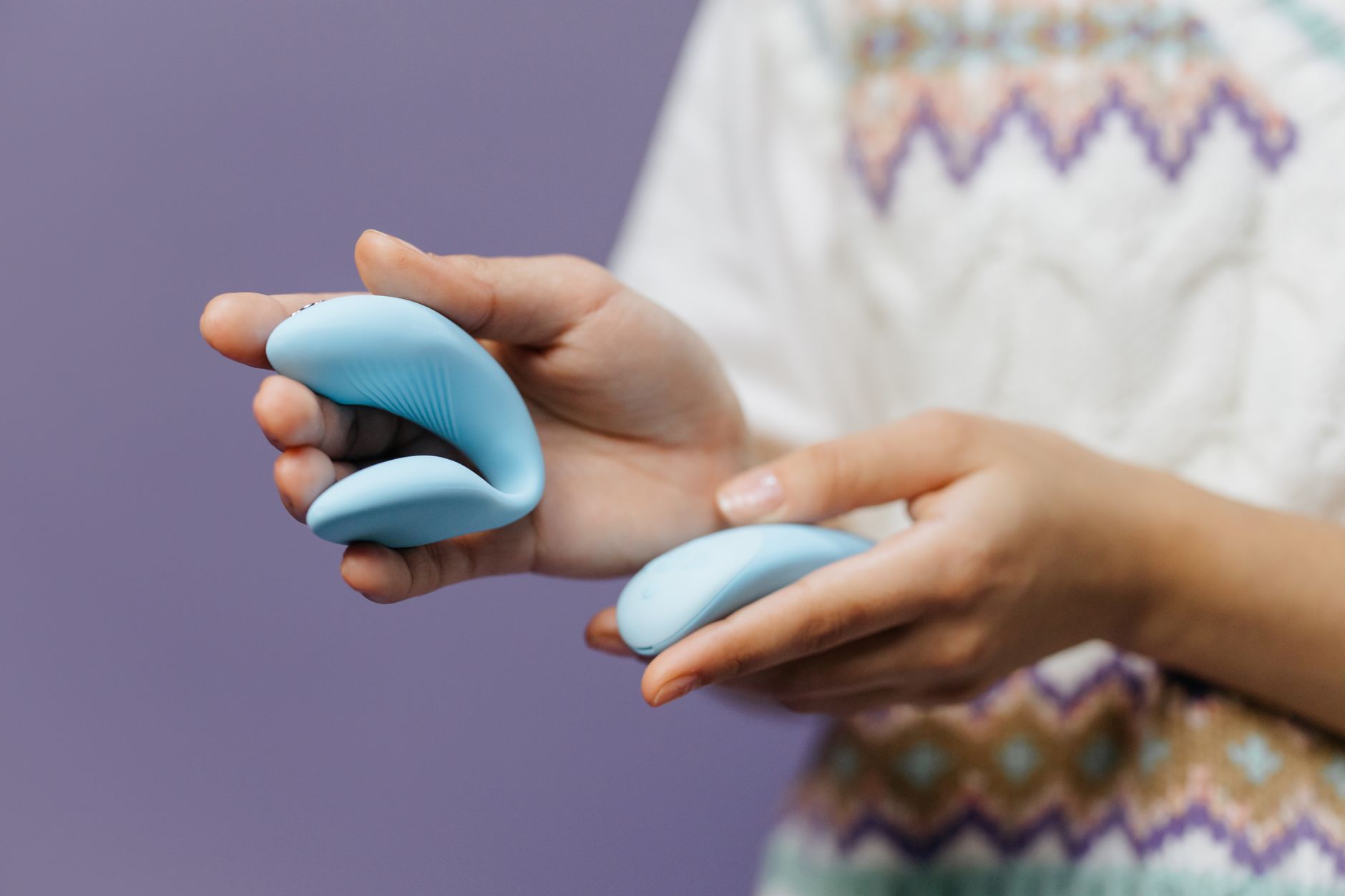
The good news? Once you understand the shift, clitoral vibrators like the lemon vibrator become even more effective than they were before. You just have to use them differently.
Why your old vibrator technique stopped working
In your 20s and early 30s, you could probably warm up quickly with surface stimulation. Light fluttering patterns, low intensity, quick buildup. Your body responded fast because blood flow to the clitoris happened rapidly and arousal ramped up steeply.
After 40, that slope flattens. Blood flow builds more slowly. The clitoral tissue becomes slightly less engorged during arousal, which means surface stimulation alone often feels less intense. Add in that many of us are busier, more stressed, or carrying unresolved tension in the pelvic floor, and you're starting from a place of less raw sensitivity.
The trap is thinking you need a more powerful vibrator. You don't. You need a smarter approach to stimulation intensity and timing.
Pattern, intensity, and timing: the three levers
When using a lemon vibrator for longer arousal windows, focus on three things.
Lever 1: Start deeper, not lighter. The lemon clitoral vibrator's suction technology works because it stimulates the entire clitoral complex, not just the external glans. When arousal takes longer, skip patterns 1 and 2. Start at pattern 3 or 4 and work from there. You're looking for engagement, not a slow burn.
Lever 2: Add stationary pressure over movement. At 25, you might have moved the vibrator around, chasing sensation. After 40, hold the lemon vibrator steady against the clitoral area for 30-60 seconds at a time. Let the stimulation build. Move it only when sensation plateaus. This approach works better because the clitoral tissue needs sustained pressure to fully engorge.
Lever 3: Front-load your warm-up time. If you used to need 5-10 minutes of vibrator use to climax, budget 15-25 minutes now. But don't just use the vibrator for all of it. Spend the first 5-8 minutes on manual stimulation, fantasy, or partner touch. Get your nervous system engaged. Then bring the lemon vibrator in when arousal is already moving.
The mental piece matters more than you think
Honestly, half of the reason orgasms take longer after 40 is neurological, not physiological. Your brain has more in it. You're carrying work stress, relationship dynamics, body image stuff, aging anxiety. That mental noise competes with pleasure signals.
When using a clitoral vibrator, create conditions for focus. That means:
- Turn your phone off before you start. Not silent. Off. Your brain can sense an active device nearby.
- Set a time boundary. Tell yourself you have 30 minutes, not open-ended. Paradoxically, scarcity of time makes focus easier.
- Use fantasy deliberately. Don't expect sensation alone to do the work. Bring a story, a memory, or a scenario to the experience.
- If your partner is involved, brief them on the new timeline. "I need about 20 minutes and I need you to stay engaged with me" is very different from "I'm having trouble coming" which creates pressure.
The vibration itself is a tool, but your mental state is the engine.
Positioning and angle shifts everything
After 40, the angle at which you use your lemon vibrator matters more. Many people default to direct downward pressure. Try these variations instead.
The upward angle. Tilt the vibrator so it's pressing upward slightly toward the pubic bone. This creates indirect stimulation of the internal clitoral arms, which are still highly sensitive. It often feels less intense than direct glans contact, which means you can sustain it longer without oversensitization.
The side approach. Stimulate from the side rather than directly on top. The clitoral glans has a preferred side for many people, and this angle often requires less clitoral tissue to be engorged to feel strong. Try both sides and stick with what responds.
The base position. Some people find that focusing on the base of the clitoris rather than the tip becomes more effective after 40. The clitoral base has dense nerve tissue and often responds better when arousal is still building.
You might find that the angle that worked for years suddenly feels wrong. That's normal. Your tissue has shifted. Adjust your positioning.
Why the lemon vibrator design works better for this problem
The lemon clitoral vibrator's suction mechanism is genuinely useful here because it doesn't rely on you finding the exact spot of maximum sensitivity. The suction engages a wider area, which means it works even when arousal is building unevenly or when sensitivity is scattered rather than concentrated.
Compare this to a traditional vibrator that requires precise contact with the most sensitive point. If you're slightly desensitized or arousal is patchy, you spend 20 minutes chasing the right spot. The lemon vibrator creates the stimulation field for you.
When to add lubrication and other tools
After 40, most people benefit from water-based lubrication even if natural lubrication is fine. It's not about dryness. It's about reducing friction just enough that you can sustain stimulation longer without skin irritation. A small amount of lube lets you use a lemon vibrator for 20-30 minutes without the build-up that can lead to soreness.
If a partner is involved, consider building in manual foreplay before bringing the vibrator in. The combination of partner touch plus vibrator often works better than vibrator alone because you get two different kinds of stimulation, which keeps your nervous system engaged.
The orgasm itself might feel different
Here's something nobody tells you: orgasms after 40 sometimes feel less intense but more satisfying. The buildup takes longer, but the release often feels more integrated into your whole body rather than localized. Some people report that orgasms become less of a sprint to a finish line and more of a wave.
Don't judge the orgasm by the old standard. Judge it by whether it felt good to you in the moment. If you're taking 20 minutes but you're genuinely enjoying the process and the release feels solid, that's a win. You're not underperforming.
Troubleshooting: what if nothing is working
If you've adjusted your technique, lengthened your warm-up, and shifted your positioning and still can't climax, a few other things might be at play.
First, check your stress and sleep. A person who's stressed and exhausted will struggle to orgasm regardless of technique. This isn't a vibrator problem. It's a nervous system problem. Sleep, walks, and stress reduction often fix this faster than any toy.
Second, consider your pelvic floor tension. After 40, many people unconsciously hold tension in the pelvic floor during sex. This makes orgasm harder. If you suspect this, try relaxing the pelvic floor deliberately before using the lemon vibrator. Breathe deeply and actively relax as you exhale. This often makes a massive difference.
Third, if you're on antidepressants, anxiety meds, or blood pressure medications, check the side effects. Many medications genuinely affect arousal and orgasm capacity. This is worth discussing with your doctor. How lemon vibrators work for clitoral arousal if you take antidepressants covers this in depth.
Fourth, relationship tension matters. If there's unresolved conflict with a partner, your body knows it. You can't think your way out of this. You have to address it. That might mean therapy, a hard conversation, or both.
Frequently asked questions
How much longer should warm-up take after 40?
Most people go from 5-10 minutes to 15-25 minutes. But it's not linear. Some days you're ready in 12 minutes. Other days it takes 30. Don't fight it. Work with your body's timeline that day. Pressure to orgasm on a schedule makes everything slower.
Does using a lemon vibrator more often make orgasms faster?
Not really. Regular use doesn't accelerate orgasm time the way it might at 25. What it does do is build confidence and familiarity with your body's new patterns. You learn what works faster because you know yourself better. But the physiological timeline stays roughly the same.
Can hormonal changes explain all of this?
Mostly, yes. Testosterone drops about 25-30% between ages 20 and 50, which directly affects clitoral sensitivity and arousal speed. Estrogen levels can fluctuate in your 40s even if you're not in menopause yet. This changes vaginal tissue and blood flow. But stress, medications, and relationship dynamics pile on top of the hormonal shift, so it's rarely just one thing.
Should I be worried if I'm taking longer to orgasm?
No. It's a normal physiological shift, not a sign of dysfunction. Millions of people experience this. It's actually an opportunity to slow down, enjoy the process more, and tune into your body differently than you did at 25. If it's causing distress in your relationship, that's worth addressing together, but the slower arousal itself is not a problem.
Is there anything else that helps besides technique changes?
Yes. Sleep, stress reduction, and cardiovascular fitness all matter hugely. A person who exercises regularly and sleeps well will almost always have easier orgasms than someone who's sedentary and exhausted. Kegel exercises and pelvic floor relaxation also help. And if you're with a partner, genuinely connecting emotionally before sex makes everything easier.
When should I see a doctor about this?
If orgasm difficulty appeared suddenly, if it's causing significant distress, or if it's paired with pain, see a doctor. A gynecologist or sex medicine specialist can rule out hormonal issues or medication side effects. Most of the time, the answer is technique and lifestyle. But ruling out a medical cause gives you peace of mind.
The real shift
Using a lemon vibrator after 40 is less about fighting your body and more about meeting it where it is. Longer arousal windows aren't a failure. They're an invitation to slow down, to be more intentional, to stop chasing sensation and start savoring it. Your body hasn't declined. It's just asking you to show up differently.
If you're struggling with this transition, you're not alone. How to use a lemon vibrator when arousal takes longer to build goes deeper into pacing and buildup strategies. And if you're navigating relationship dynamics around this shift, how to use a lemon vibrator with a partner when they're reluctant covers communication that actually works.
Your pleasure matters at every age. It just looks different now.